
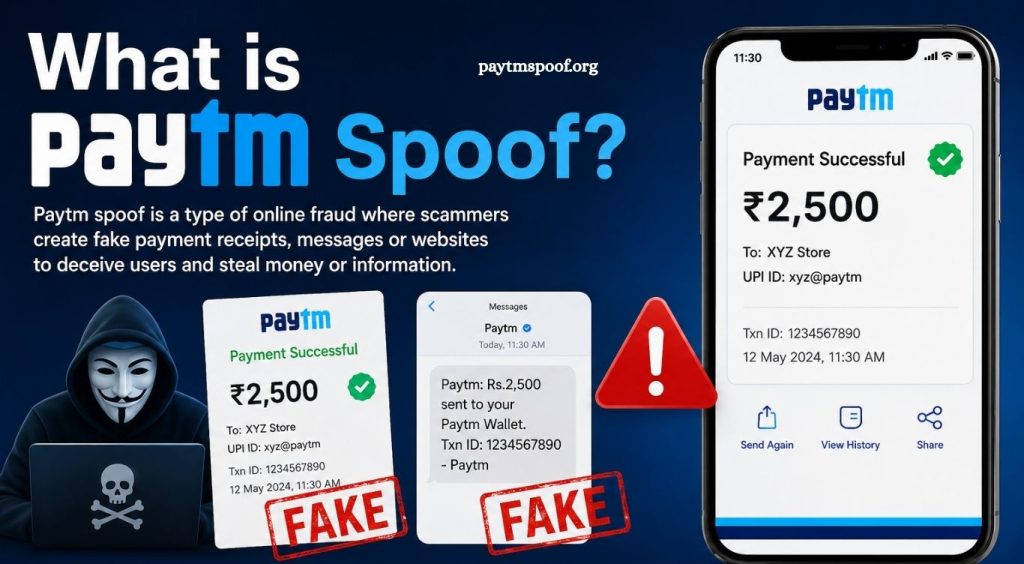
Digital payment platforms have transformed the way people send money, pay bills, and manage everyday transactions. Along with this rapid growth, cybercriminals have developed new techniques to deceive users and exploit trusted payment services. One common tactic involves creating fake payment confirmations or fraudulent interfaces that closely resemble legitimate payment applications. This deceptive practice is widely known as a Paytm spoof.
Many people become victims because spoofed payment screens, fake SMS messages, and counterfeit transaction receipts often look almost identical to genuine ones. Understanding how a Paytm spoof works helps users recognize warning signs, avoid financial fraud, and protect personal information. Awareness remains one of the strongest defenses against online payment scams.
What Is Paytm Spoof?
A Paytm spoof refers to any fraudulent attempt that imitates the appearance, branding, or functionality of the Paytm application or payment system. The primary objective involves convincing users, merchants, or businesses that a payment has been completed when no genuine transaction actually exists.
Read More: What Is Paytm Spoof?
Fraudsters create fake payment screenshots, counterfeit payment receipts, cloned websites, modified applications, or fabricated SMS notifications. These deceptive methods manipulate trust and encourage victims to deliver products, provide services, or disclose confidential information based on false payment evidence.
How Does a Paytm Spoof Work?
A Paytm spoof usually begins with a scammer generating a fake payment confirmation that closely resembles an authentic transaction receipt. The fake confirmation may display realistic transaction IDs, timestamps, merchant names, and payment amounts.
After creating the counterfeit receipt, the scammer shares it through messaging platforms, email, or social media. Unsuspecting sellers often verify only the screenshot instead of checking their official Paytm transaction history. Once goods or services change hands, the fraud becomes apparent because no payment actually reached the recipient’s account.
Common Types of Paytm Spoof
Several forms of Paytm spoofing appear across online marketplaces and local businesses. Fake payment screenshots represent the most common technique because they require minimal technical knowledge. Fraudsters also distribute cloned Paytm login pages designed to steal account credentials from unsuspecting users.
Another widespread method involves counterfeit SMS notifications that imitate official payment alerts. Some attackers even create fake mobile applications that resemble the authentic Paytm interface, encouraging users to enter sensitive information such as passwords, mobile numbers, or one-time verification codes.
Why Cybercriminals Use Paytm Spoofing
Financial gain remains the primary motivation behind Paytm spoof attacks. Criminals exploit user trust, especially during fast-paced transactions where merchants rely on payment notifications rather than confirming account balances.
Spoofing also enables identity theft, unauthorized account access, and financial fraud. Stolen credentials may provide attackers with opportunities to compromise digital wallets, banking information, or personal data that can support additional cybercrimes.
Warning Signs of a Paytm Spoof
Several indicators help identify fraudulent payment confirmations. Poor image quality, unusual fonts, spelling mistakes, inconsistent transaction details, and unexpected payment notifications often suggest manipulation.
Suspicious website addresses, requests for confidential information, or pressure to complete transactions quickly should also raise concern. Genuine payment confirmations always match transaction records available within the official Paytm application.
How to Protect Yourself from Paytm Spoof Scams
Protection begins with verifying every payment directly through the official Paytm application instead of relying on screenshots or SMS messages. Transaction history provides the most reliable confirmation that funds have actually arrived.
Users should download Paytm only from official app stores, avoid clicking suspicious links, enable two-factor authentication whenever available, and never share passwords or one-time verification codes. Regular software updates further strengthen device security by addressing newly discovered vulnerabilities.
What to Do After Encountering a Paytm Spoof
Anyone who suspects a Paytm spoof should immediately verify account activity through the official application. If fraudulent activity appears, changing account credentials and securing connected banking information become essential first steps.
Victims should also report suspicious activity to Paytm customer support and notify local cybercrime authorities when financial losses occur. Quick reporting increases the likelihood of limiting damage and supporting fraud investigations.
Importance of Digital Payment Awareness
Digital payment security depends on informed decision-making. Fraud techniques continue evolving, making user awareness more valuable than ever. Understanding spoofing methods reduces opportunities for scammers while encouraging safer online financial practices.
Businesses, shop owners, freelancers, and individual users all benefit from adopting careful payment verification habits. A few seconds spent confirming a transaction can prevent significant financial loss and protect valuable personal information.
Conclusion
A Paytm spoof is a common online scam that uses fake payment confirmations, counterfeit websites, or fraudulent messages to mislead users and businesses. Understanding how these scams work makes it easier to recognize suspicious activity and avoid financial losses. Always verify transactions through the official Paytm app instead of trusting screenshots or SMS notifications. By staying alert and following basic cybersecurity practices, you can protect your money, personal information, and digital payment experience from spoofing attacks.