
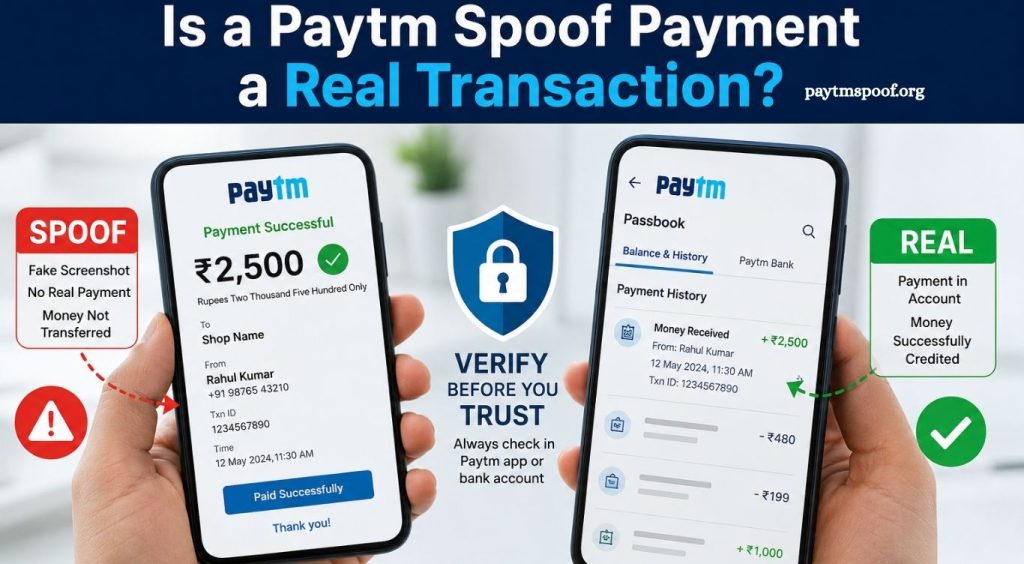
Digital payment apps have transformed the way people send and receive money. Millions of users rely on payment platforms for shopping, business transactions, bill payments, and money transfers. As digital payments continue to grow, fraudsters have also developed new methods to deceive individuals and businesses. One common scam involves fake payment confirmations that appear genuine at first glance.
A Paytm spoof payment is one such deceptive tactic. Many shopkeepers, freelancers, and online sellers become victims because they trust screenshots, fake notifications, or manipulated payment receipts without verifying the actual transaction. Understanding how spoof payments work can help users protect their money and avoid financial losses.
Understanding a Paytm Spoof Payment
A Paytm spoof payment refers to a fake payment confirmation created to make someone believe that money has been transferred successfully. Although the payment notification, receipt, or screenshot may look authentic, no real transaction has taken place.
Read More: What is Paytm Spoof?
Scammers often use editing tools, fake payment applications, or modified interfaces to generate convincing payment proofs. These fake confirmations are designed to resemble genuine Paytm transaction receipts, making it difficult for an untrained person to identify the difference.
Is a Paytm Spoof Payment a Real Transaction?
The simple answer is no. A Paytm spoof payment is not a real financial transaction. No funds move from the sender’s account to the receiver’s account. The fake confirmation only creates an illusion of successful payment.
A legitimate Paytm transaction always appears in the receiver’s Paytm account, linked bank account, or official transaction history. If the amount does not appear in these records, the payment has not been completed.
How Paytm Spoof Scams Work
Fraudsters usually create fake payment receipts that closely resemble official Paytm confirmations. They may show edited transaction IDs, fabricated timestamps, and fake payment statuses to convince the recipient that payment has already been processed.
Some scammers display animated screens that imitate the Paytm payment success page. Others send fake SMS messages or screenshots through messaging applications. Since these images look realistic, victims often hand over products or complete services before verifying the payment.
Signs of a Fake Paytm Payment
Several warning signs can help identify a spoof payment. The payment confirmation may arrive only as a screenshot instead of appearing inside the Paytm application. The receiver’s transaction history may remain unchanged despite the claimed payment.
Another common indicator is pressure from the sender to deliver products immediately without checking the account balance. Fraudsters often attempt to create urgency so the victim skips proper verification.
How to Verify a Genuine Paytm Transaction
The safest method is checking the official Paytm application or connected bank account. A genuine payment will always appear in the transaction history with complete payment details.
Users should also verify the credited amount rather than relying on SMS messages or screenshots. If money has not reached the account, the transaction remains incomplete regardless of any receipt presented by the sender.
Common Targets of Paytm Spoof Fraud
Local shopkeepers frequently become victims because they handle numerous customer payments throughout the day. Small business owners, food vendors, delivery personnel, freelancers, and online marketplace sellers also face significant risk.
Scammers usually target individuals who process payments quickly without confirming the actual account balance.
How to Stay Safe from Paytm Spoof Payments
Awareness remains the strongest defense against payment fraud. Every payment should be verified directly through the official application or bank statement before delivering products or services.
Business owners should train employees to confirm every digital payment independently. Relying solely on customer-provided screenshots increases the risk of financial loss.
Using official notifications, enabling transaction alerts, and reviewing payment history regularly can significantly reduce the chances of becoming a victim.
What to Do After Receiving a Fake Payment Proof
If someone presents a suspicious payment confirmation, avoid completing the transaction until verification is complete. Check the official Paytm application and confirm whether the funds have actually been credited.
If fraud is suspected, preserve screenshots, chat records, and transaction details. Report the incident through Paytm’s official support channels and notify local cybercrime authorities if necessary. Quick reporting improves the chances of preventing further scams.
Conclusion
A Paytm spoof payment is not a genuine transaction. It is a fraudulent method used to trick individuals and businesses with fake payment confirmations while no money is actually transferred. Always verify payments through the official Paytm app or your bank account before handing over products or services. Staying alert and confirming every transaction can help you avoid financial losses and protect yourself from digital payment scams.