
In today’s digital payment world, mobile wallets have become a core part of daily financial transactions. Among them, Paytm is widely used for sending money, paying bills, shopping, and managing small business payments. As usage grows, cybercriminals continuously develop new ways to deceive users through spoofing techniques that closely mimic real Paytm interfaces and communications.
A Paytm spoof refers to fake messages, websites, apps, or notifications designed to look like official Paytm services. The main goal of these scams is to trick users into sharing sensitive information such as OTPs, passwords, or banking details. Understanding how these spoof attempts work and recognizing their warning signs is essential for protecting financial safety in the digital space.
Understanding Paytm Spoofing in Digital Payments
Paytm spoofing typically involves the imitation of the original Paytm platform in a way that appears legitimate at first glance. Cyber attackers create cloned apps or phishing pages that visually resemble official Paytm screens. In some cases, fake customer care numbers are also circulated to mislead users into calling and revealing personal details.
Read More: How can I verify a Paytm payment?
These fraudulent activities are designed with psychological manipulation in mind. Users are often pressured through urgency, such as fake alerts about account blocking, reward winnings, or suspicious login attempts. When individuals respond without verification, attackers gain access to sensitive financial information. The growing sophistication of these scams makes awareness the first line of defense.
Unusual Communication Patterns as a Warning Signal
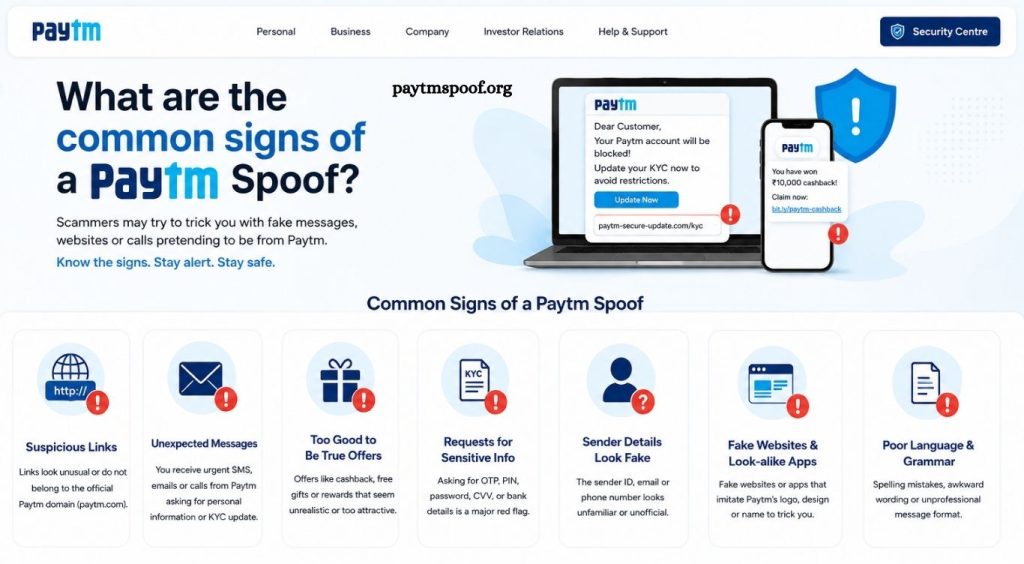
One of the earliest signs of a Paytm spoof is unusual communication behavior. Fraud messages often arrive from unknown numbers or email addresses that do not match official Paytm domains. Even when the message appears professional, subtle inconsistencies such as spelling errors, strange formatting, or overly urgent tone can indicate fraud.
In many cases, spoof messages try to push users into immediate action. They may claim that your account will be suspended unless you verify details instantly. Real Paytm communication rarely uses such pressure tactics. Any message demanding urgent financial action without proper verification should be treated with caution.
Fake Links and Suspicious URLs
Another strong indicator of Paytm spoofing is the presence of suspicious links. These links may look similar to the official Paytm website but often include extra characters, misspellings, or unusual domain extensions. Clicking on such links can redirect users to phishing pages designed to steal login credentials.
A legitimate Paytm website will always use secure and recognizable domains. Spoofed links may also attempt to download malicious apps or ask users to enter sensitive data like UPI PINs or OTPs. Checking the URL carefully before interacting with any page helps prevent unauthorized access to financial accounts.
App Cloning and Unauthorized Installations
Fake Paytm apps are another common method used in spoofing attacks. These apps may be distributed through unofficial websites or third-party app stores. Once installed, they can mimic the real Paytm interface while secretly capturing user inputs.
A key sign of a spoofed application is unusual behavior such as frequent crashes, excessive permission requests, or interface differences from the original app. Official Paytm apps are only available on trusted platforms and undergo regular security updates. Any app installed from unknown sources should be considered risky.
Requests for Sensitive Information
Legitimate financial platforms never ask for confidential information such as UPI PINs, OTPs, or passwords through messages, calls, or emails. A common sign of Paytm spoofing is direct requests for such details under the pretext of verification or security checks.
Scammers often pose as customer support agents and attempt to gain trust by using official-sounding language. However, any request to share confidential credentials is a clear warning sign. Users should never disclose financial details to unknown contacts, regardless of how convincing the message appears.
Mismatch in Branding and Interface Design
Visual inconsistencies are another important clue when identifying Paytm spoof attempts. Fake pages or apps may closely resemble the original Paytm design but often contain small errors in logo quality, color shades, or layout alignment.
These differences may seem minor, but they are intentional shortcuts used by scammers to quickly replicate the platform. Users familiar with Paytm’s interface can often detect these irregularities upon closer observation. A genuine platform maintains consistent branding across all official channels.
Unexpected Transaction Alerts and Fake Rewards
Spoof scams often involve fake notifications claiming that users have received money, cashback, or rewards. These messages are designed to create excitement and encourage users to click on malicious links or share details.
Similarly, some spoof messages may claim unauthorized transactions have occurred and ask users to immediately verify their accounts. Real financial alerts from Paytm are always verifiable within the official app. External messages requesting action should be treated as suspicious until confirmed through the app itself.
Behavioral Manipulation and Emotional Triggers
A subtle but powerful sign of Paytm spoofing lies in emotional manipulation. Scammers often use fear, urgency, or excitement to push users into making quick decisions. Messages may threaten account suspension or promise unrealistic financial benefits.
This psychological pressure reduces critical thinking and increases the likelihood of mistakes. Recognizing these emotional triggers helps users pause and verify before responding. Genuine financial services maintain transparency without applying unnecessary pressure.
How Awareness Strengthens Digital Safety
Understanding the signs of Paytm spoofing plays a crucial role in preventing financial fraud. As digital payment systems continue to expand, attackers also refine their techniques. Staying informed about these tactics reduces vulnerability and strengthens personal cybersecurity habits.
Users should always verify communication through official apps or websites instead of relying on external messages. Regularly updating apps, enabling two-factor authentication, and avoiding unknown links significantly reduce risk exposure. Digital awareness acts as a protective shield in an increasingly connected financial ecosystem.
Conclusion
Paytm spoofing is a growing threat in the digital payment landscape, targeting users through fake messages, cloned apps, and deceptive communication. Recognizing warning signs such as suspicious links, urgent requests, fake branding, and emotional manipulation helps in the early detection of fraud attempts.
By maintaining caution and relying only on official Paytm platforms, users can safeguard their financial information and avoid falling victim to scams. Awareness and vigilance remain the most effective tools against evolving cyber threats in modern digital transactions.