
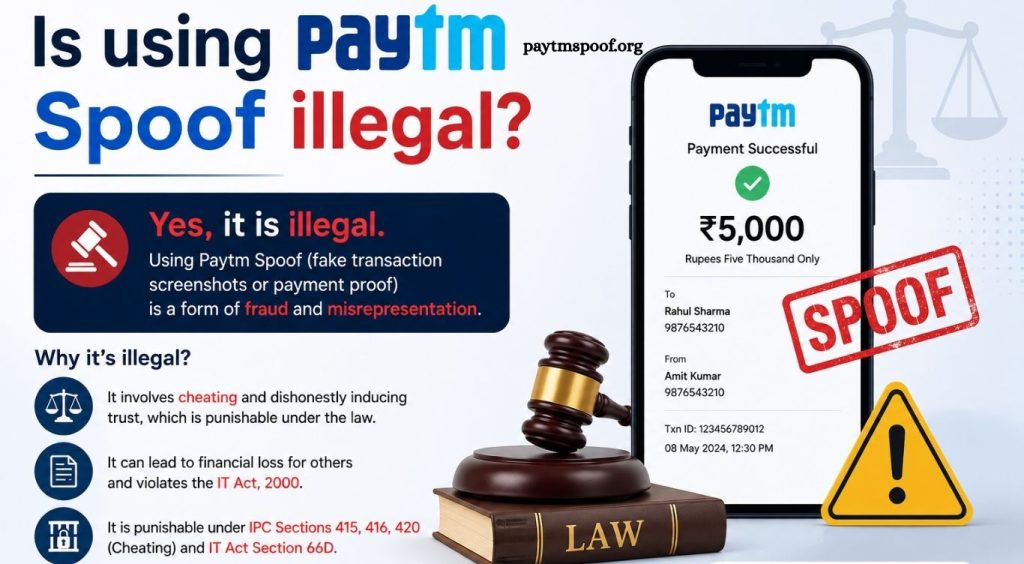
Digital payment platforms have changed the way people transfer money, pay bills, and complete online transactions. Among these platforms, Paytm has become one of the most trusted digital wallets in India because of its convenience and wide acceptance. At the same time, terms such as “Paytm spoof” have started appearing across online forums, social media, and technology discussions. Many people search for information about Paytm spoof because they want to understand whether it is legal, safe, or simply another online trick.
Understanding the legal status of Paytm spoof is important before interacting with any application, website, or software that claims to generate fake payment screenshots or transaction confirmations. While some users consider these tools harmless for entertainment or demonstration purposes, using them in the wrong way can lead to serious legal consequences. This article explains what Paytm spoof means, whether using it is illegal, potential legal risks, and safer alternatives for educational or business purposes.
What Is Paytm Spoof?
Paytm spoof refers to software, applications, or websites designed to imitate genuine Paytm payment notifications, transaction receipts, or payment confirmation screens. These tools create fake transaction records that closely resemble authentic Paytm interfaces.
Read More: How can merchants protect themselves from Paytm Spoof scams?
Most spoof tools do not process actual payments. Instead, they generate visual copies of payment confirmations that appear genuine at first glance. Because these fake confirmations look convincing, dishonest individuals sometimes use them to deceive merchants, customers, or service providers into believing that payment has already been completed.
Although some developers claim spoof tools exist only for educational demonstrations or interface testing, their misuse has become a major concern for businesses and consumers alike.
Is Using Paytm Spoof Illegal?
Using Paytm spoof becomes illegal when it is intended to deceive another person, commit fraud, or obtain products or services without making a legitimate payment. Creating or sharing fake payment confirmations to mislead someone may violate criminal laws related to fraud, cheating, forgery, identity misuse, and cybercrime.
If someone uses a spoof application merely to understand user interface design or for educational demonstrations without attempting to deceive anyone, the legal situation may differ. However, distributing fake payment receipts or presenting them as genuine can quickly cross legal boundaries.
Authorities evaluate both the purpose and the consequences of using spoof software. When financial loss, deception, or dishonest intent exists, legal penalties can become severe.
Legal Consequences of Paytm Spoof Misuse
Using fake payment confirmations to cheat businesses or individuals may result in criminal investigations and prosecution. Cybercrime units actively investigate digital payment fraud because electronic transactions leave valuable evidence such as device information, communication records, and internet activity.
Individuals found guilty of financial fraud may face fines, imprisonment, compensation claims, or additional penalties under applicable cybercrime and fraud laws. Business owners who accept fake payment confirmations may also report incidents to payment providers and law enforcement agencies, increasing the chances of legal action.
Apart from criminal liability, users involved in payment fraud may lose access to digital payment services, online marketplaces, or financial accounts associated with suspicious activities.
Why People Use Paytm Spoof Tools
Some people become curious about Paytm spoof after seeing videos on social media or online demonstrations. Others mistakenly believe fake payment confirmations provide an easy method to obtain products without paying. Unfortunately, this misconception has contributed to many fraud cases.
Another group includes software learners who want to study mobile interface design or payment notification systems. While educational curiosity itself is not illegal, using fake payment confirmations outside controlled demonstrations creates unnecessary legal and ethical risks.
Content creators may also use simulated payment screens for tutorials or educational videos. In these situations, clear disclaimers should indicate that the transaction is fictional and created only for demonstration purposes.
Risks Beyond Legal Issues
Legal consequences represent only one part of the problem. Many Paytm spoof applications originate from unknown websites that lack proper security standards. Downloading such software may expose devices to malware, spyware, ransomware, or data theft.
Some spoof applications request unnecessary permissions, including access to contacts, storage, messages, or banking information. Granting these permissions can compromise sensitive personal data and financial accounts.
Fake payment software also damages trust between businesses and customers. Merchants become more cautious when accepting digital payments, often delaying product delivery until payments appear in official transaction records. This creates inconvenience for honest customers while increasing operational challenges for businesses.
Ethical Considerations
Ethics play a significant role in digital financial transactions. Trust forms the foundation of every online payment system. When someone intentionally creates or shares fake payment confirmations, that trust is weakened.
Businesses depend on genuine transactions to maintain stable operations. Small retailers, local vendors, freelancers, and independent professionals may suffer financial losses because of fraudulent payment claims. Even minor fraud can significantly affect individuals with limited financial resources.
Responsible digital behavior strengthens confidence in online payment platforms and helps maintain a secure financial ecosystem for everyone.
How Businesses Can Prevent Payment Spoofing
Merchants should verify payment status through official Paytm transaction records instead of relying solely on screenshots or notification sounds. Checking transaction history within the official application provides greater confidence that payment has actually been received.
Businesses can also educate employees about common payment fraud techniques and encourage verification before delivering products or services. Training staff to recognize suspicious behavior reduces financial losses and improves customer security.
Maintaining clear payment verification procedures protects both merchants and genuine customers from misunderstandings.
Safe Alternatives for Demonstrations
Developers, educators, and content creators often require realistic payment interfaces for testing or instructional purposes. Instead of using misleading spoof tools, they should rely on mock interfaces, demo environments, graphic design software, or officially approved testing solutions.
Clearly labeling demonstration content prevents confusion and ensures viewers understand that no real financial transaction has occurred. Responsible demonstrations support learning without encouraging fraudulent behavior.
Conclusion
Using Paytm spoof is not automatically illegal in every situation, but using fake payment confirmations to deceive others, commit fraud, or gain financial benefit is unlawful and may result in serious legal consequences. Fraud involving digital payment platforms can lead to criminal charges, financial penalties, account restrictions, and long-term reputational damage.