
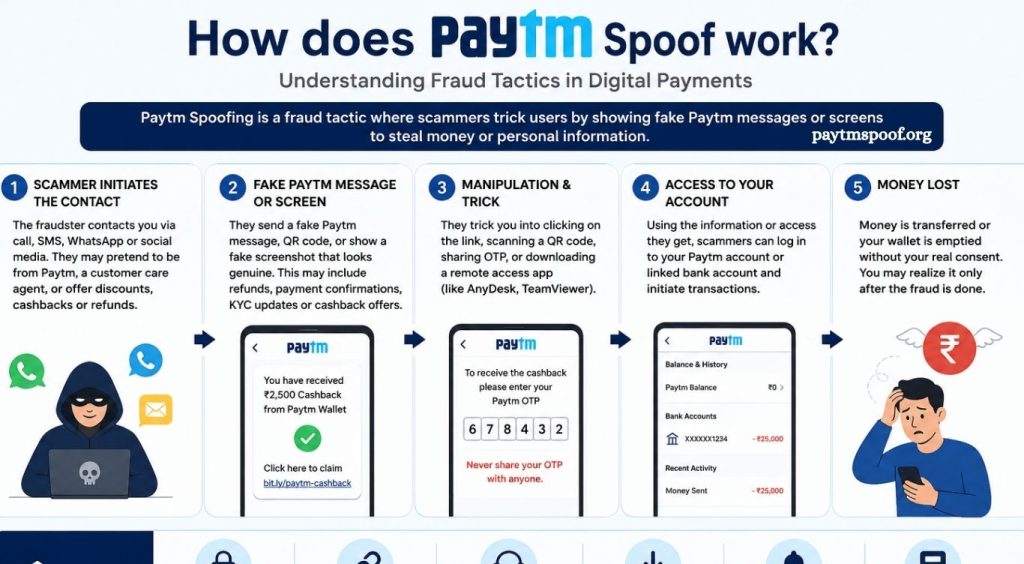
Digital Paytm spoof has changed the way money moves across India, making transactions faster and more convenient. Among these platforms, Paytm stands as a widely used service for UPI transfers, mobile recharges, bill payments, and online shopping. As usage grows, cybercriminals also evolve their methods to exploit users through deceptive practices like Paytm spoofing.
Paytm spoof refers to a fraudulent technique where attackers imitate the identity, messages, or interface of Paytm to trick users into sharing sensitive information or making unauthorized payments. These scams rely on trust, urgency, and visual similarity to legitimate Paytm communication. Understanding how these spoof attacks operate is essential for maintaining financial safety in the digital ecosystem.
What Paytm Spoof Means in Digital Fraud
Paytm spoof is a form of phishing or social engineering attack. Fraudsters create fake SMS messages, emails, or even cloned websites that resemble official Paytm communication. The goal is to mislead users into believing the message or interface is authentic, prompting them to enter OTPs, login credentials, or UPI PINs.
Read More: Is a Paytm Spoof Payment a Real Transaction?
In many cases, attackers also use caller ID spoofing, where incoming calls appear as if they originate from Paytm support. This manipulation increases credibility and pressures users into quick decisions without verification.
How Paytm Spoof Attacks Function
Paytm spoof works by exploiting user psychology and visual imitation. Attackers study official Paytm communication style, then replicate logos, language tone, and formatting. When a user receives such a message, it often includes urgency, such as account suspension warnings or transaction failure alerts. This urgency pushes users to click malicious links or share confidential details.
Once the user interacts with these fake elements, attackers gain access to sensitive credentials. With this access, they can initiate unauthorized transactions or take control of the victim’s account. The entire process depends on deception rather than technical hacking, making awareness the most important defense.
Signs of Paytm Spoof Activity
Paytm spoof attempts often show subtle inconsistencies. Fake messages may contain slightly altered URLs, spelling errors, or unusual domain names. Unexpected requests for OTP, PIN, or personal banking details also indicate fraud. Legitimate services never ask for such sensitive information through messages or calls.
Another common sign is pressure-based communication. Fraud messages often create fear, such as account blocking or urgent verification, to bypass logical thinking. Recognizing these patterns helps users avoid falling into traps.
Security Measures Against Paytm Spoof Fraud
Protection against spoofing starts with cautious digital behavior. Users should avoid clicking unknown links and always verify communication through official Paytm app channels. Keeping two-factor authentication active adds an extra layer of security.
Regular monitoring of transaction history also helps detect unauthorized activity early. Users should report suspicious messages directly to official support channels instead of responding to unknown senders.
Conclusion
Paytm spoof is a growing cyber threat built on deception rather than technical intrusion. By imitating trusted communication channels, attackers attempt to manipulate user behavior and gain unauthorized access to financial data. Awareness, verification, and cautious digital habits remain the strongest defenses against such fraud attempts in today’s digital payment landscape.