
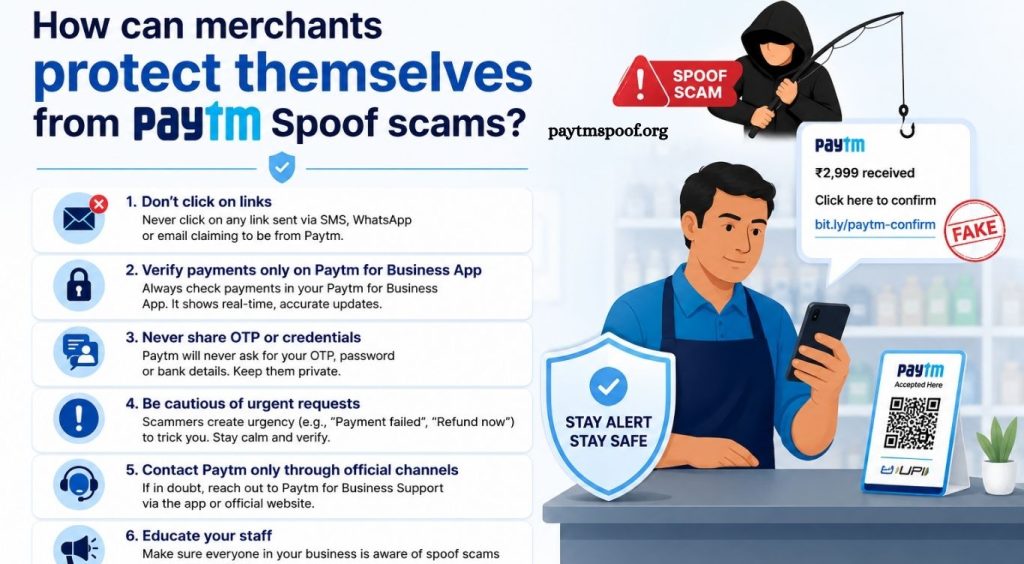
Digital payments have transformed business operations across India. Fast transactions, instant confirmations, and convenient mobile applications have created a seamless payment experience for customers and merchants alike. Alongside these benefits, cybercriminals continue developing new methods to exploit digital payment systems. Among these threats, Paytm spoof scams have become a growing concern for shop owners, retailers, restaurants, and service providers who rely on digital transactions every day.
Many merchants become victims because fake payment confirmations often appear convincing at first glance. Fraudsters use manipulated screenshots, counterfeit payment notifications, or cloned interfaces that closely resemble genuine Paytm transaction alerts. A few seconds of inattention can result in financial losses and damaged customer trust. Understanding these scams and adopting practical security habits can significantly reduce business risk while ensuring every transaction remains secure.
Understanding Paytm Spoof Scams
A Paytm spoof scam refers to fraudulent activity where criminals create fake payment confirmations to convince merchants that money has already reached their account. Instead of completing a legitimate transaction, scammers display edited screenshots, fake payment applications, or counterfeit notification messages that mimic genuine Paytm confirmations.
Read More: What are the common signs of a Paytm Spoof?
These deceptive methods rely on visual similarity rather than successful payment processing. Since many businesses experience high customer traffic, scammers exploit busy periods when merchants may accept visual confirmation without verifying receipt of payment. This tactic makes small retail stores, food outlets, pharmacies, fuel stations, and local businesses common targets.
Why Merchants Become Easy Targets
Busy business hours often create an environment where quick decision-making becomes necessary. Customers stand in queues, employees manage multiple tasks, and payment verification may receive less attention than product delivery. Fraudsters recognize these situations and attempt transactions during peak business hours.
Another contributing factor involves overreliance on notification sounds or screenshots. Many merchants mistakenly assume every notification represents successful payment settlement. However, only confirmation inside the merchant’s registered Paytm account or linked bank account should determine transaction completion.
Limited awareness regarding spoof applications also increases vulnerability. Several fake applications generate realistic payment success screens without initiating any financial transaction. Without proper verification practices, merchants may unknowingly release goods without receiving payment.
Common Techniques Used by Scammers
Fraudsters continuously improve their methods to imitate authentic payment confirmations. Fake screenshots remain one of the most common techniques because image editing software allows scammers to modify transaction details within seconds.
Another popular tactic involves counterfeit payment applications designed solely for demonstration purposes. These applications produce convincing payment success animations, transaction IDs, and confirmation screens while no money actually moves between accounts.
Some scammers also use fake SMS messages or notification pop-ups that closely resemble official payment alerts. Unsuspecting merchants may mistake these fabricated messages for legitimate payment confirmations.
QR code manipulation represents another growing concern. Criminals occasionally replace genuine merchant QR codes with fraudulent versions, redirecting payments toward different accounts. Regular inspection of displayed QR codes helps reduce this risk.
Importance of Transaction Verification
Verification remains the strongest defense against payment fraud. Every merchant should confirm payment directly within the official Paytm Business application or through the linked bank account before handing over products or completing services.
Actual payment settlement always appears inside authorized merchant records. Screenshots, customer devices, verbal assurances, or notification sounds should never replace official transaction verification.
Taking only a few additional seconds to verify payment can prevent substantial financial losses over time. Consistent verification practices also discourage fraudsters because successful scams depend upon hurried decisions.
Secure Payment Habits Every Merchant Should Follow
Strong payment discipline creates an effective barrier against spoof scams. Every employee handling customer payments should understand verification procedures and recognize suspicious behavior.
Official payment applications should remain updated because software updates frequently include security improvements and fraud protection enhancements. Secure passwords and biometric authentication provide another layer of protection for merchant accounts.
Merchants should avoid sharing login credentials with unauthorized individuals. Access to payment systems should remain limited to trusted staff members who understand secure payment handling procedures.
Visible signs near payment counters reminding customers that goods will only be delivered after successful payment confirmation can also discourage attempted fraud. Such notices establish clear expectations and reduce opportunities for scammers.
Employee Awareness Plays a Vital Role
Business security depends not only on technology but also on employee knowledge. Staff members should receive regular training regarding current payment fraud techniques and verification procedures.
Employees must understand that every successful payment generates confirmation within the official merchant dashboard rather than solely on customer devices. Practical demonstrations during employee training sessions improve awareness and confidence.
When staff members recognize suspicious customer behavior, unusual urgency, or resistance toward payment verification, they become more capable of preventing fraudulent transactions before financial loss occurs.
Benefits of Using Official Merchant Tools
Official merchant applications provide transaction history, payment status, settlement records, and customer payment information directly from authorized payment servers. These records offer reliable evidence of completed transactions.
Notification settings within official merchant platforms also provide instant alerts whenever genuine payments arrive. Since these confirmations originate from secure payment infrastructure, merchants receive accurate information regarding transaction completion.
Regular account monitoring helps identify unusual activity early. Reviewing daily settlements and transaction history enables merchants to detect discrepancies before they develop into larger financial issues.
Responding Quickly After Suspicious Activity
Immediate action increases recovery opportunities whenever suspicious payment activity occurs. Merchants should temporarily pause product delivery if payment confirmation appears doubtful until verification is complete.
Any suspected spoof attempt should be documented with available screenshots, transaction details, customer information if available, and CCTV footage where applicable. Prompt reporting to Paytm customer support and local cybercrime authorities strengthens investigation efforts.
Changing account passwords after suspicious incidents further improves security, especially if unauthorized account access appears possible. Continuous monitoring following attempted fraud helps identify additional unusual activity.
Building Long-Term Payment Security
Cybersecurity requires continuous improvement rather than a one-time action. Criminal tactics evolve regularly, making awareness and education essential parts of business operations.
Merchants who establish consistent verification procedures, educate employees, maintain updated software, and rely exclusively on official payment confirmations significantly reduce fraud exposure. These practices also strengthen customer confidence because secure payment handling reflects professional business management.
Digital payment security ultimately depends upon careful verification rather than speed. Every confirmed transaction contributes to stronger financial protection and healthier business growth.
Conclusion
Paytm spoof scams continue targeting merchants through fake payment confirmations, manipulated screenshots, counterfeit applications, and deceptive notifications. Although these scams appear increasingly sophisticated, effective protection remains achievable through disciplined verification practices and employee awareness.